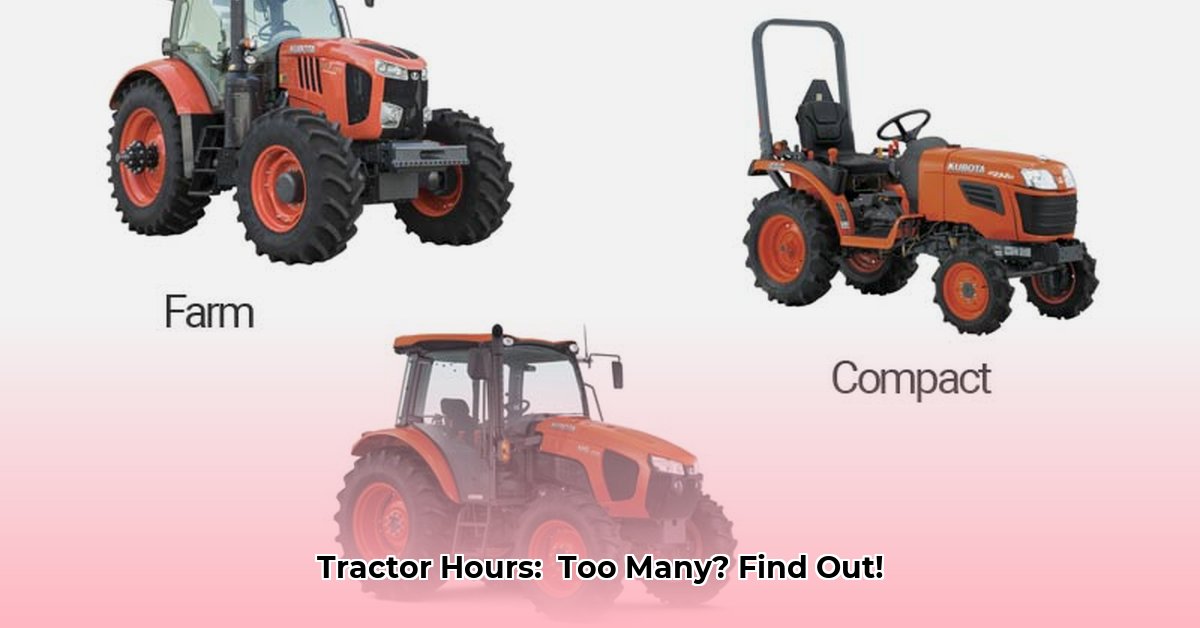
Understanding Tractor Hours: More Than Just a Number
Thinking about buying a used tractor? The hour meter reading is a useful starting point, but it's far from the whole story. A low-hour tractor neglected by its previous owner could be a money pit, while a high-hour tractor diligently maintained might offer years of reliable service. This guide will help you determine the true condition of your potential purchase and avoid costly mistakes. We'll cover everything from interpreting hour meter readings to performing thorough inspections and negotiating fair prices. For more in-depth information, check out our comprehensive guide on tractor hour analysis.
Decoding Tractor Hours: The Importance of Context
That hour meter reading provides a general idea of the tractor's use, but several factors significantly impact its lifespan. A well-maintained diesel tractor can easily surpass 10,000 hours, while a neglected gasoline tractor might show significant wear around 4,000 hours. These are averages, however; individual tractor lifespan can vary tremendously based on maintenance and operating practices. Remember, a well-maintained tractor, even with high hours, is a better investment than a neglected one with low hours.
Key Factors Affecting Tractor Lifespan
Beyond the hour meter, several crucial aspects determine a tractor's remaining useful life.
Maintenance Records: The Tractor's History
Detailed maintenance records are invaluable. A complete service history, including oil changes, filter replacements, and major repairs, is a strong indicator of how well the tractor was cared for. Incomplete or missing records should raise concerns.
Diesel vs. Gasoline Engines: Fuel Type Considerations
Generally, diesel engines are built for longer lifespans and heavier use than gasoline engines. However, both require regular, diligent maintenance to achieve their full potential. Neglect will shorten the life of any engine, regardless of fuel type.
Operating Practices: How the Tractor Was Used
The previous owner's operation practices significantly impact the tractor's longevity. Harsh treatment, such as using ether starting fluid (which damages diesel engines), will reduce lifespan drastically. Gentle, regular operation is far preferable.
Physical Inspection: A Visual Assessment
A thorough visual inspection is essential. Check for oil leaks, worn parts, rust, unusual noises, and any other signs of damage or neglect. This visual health check is crucial for identifying potential problems before purchasing.
Pre-Purchase Checklist: Steps to a Smart Purchase
Before you buy, follow these steps:
- Examine Maintenance Records: Carefully review all available maintenance records for completeness and consistency.
- Conduct a Thorough Visual Inspection: Inspect every aspect of the tractor, paying close attention to potential problem areas.
- Consider a Professional Inspection: Engage a qualified mechanic to perform an independent assessment. This preventative measure safeguards against unforeseen expensive repairs.
- Negotiate Based on Condition, Not Just Hours: Base your negotiation on the tractor's overall condition and necessary repairs, not solely on the hour meter reading.
Post-Purchase Maintenance: Extending Your Tractor's Life
Once you've bought your used tractor, proper maintenance is key to maximizing its lifespan and avoiding costly repairs.
- Create a Maintenance Schedule: Develop and adhere to a regular maintenance schedule, including oil and filter changes, fluid checks, belt inspections, and more, based on the manufacturer's recommendations.
- Use Quality Parts and Fluids: Invest in high-quality parts and fluids for optimal performance and longevity.
- Address Problems Promptly: Repair small issues immediately to prevent them from escalating into larger, more expensive problems.
- Store Properly: Store your tractor properly during periods of non-use to prevent corrosion and damage.
Conclusion: Prioritize Condition Over Hours
The hour meter is only one factor; the tractor's overall condition, maintenance history, and operating practices are equally important. A well-maintained tractor, even with high hours, is a superior investment compared to a neglected tractor with low hours. Prioritize a thorough assessment of condition, and you'll significantly increase your chances of owning a reliable machine for years to come.